
2026–2027
Escape from Happiness
Playwright: George Walker
September 10, 2026 – September 27, 2026
The Mainstage
George F. Walker's Escape from Happiness is one of the great dark comedies of the Canadian stage — a play about a family in crisis that is also, somehow, a play about hope. Set over the course of a single chaotic night in the kitchen of a working-class Toronto home, it follows Nora Doyle, the fierce and indomitable matriarch of a household already stretched to its limits, as a series of escalating intrusions forces every member of the family to reckon with what they are willing to fight for.
The production is directed by Rachel Tanaka, for whom this is a third engagement with Walker's East End cycle, following productions of Criminals in Love and Better Living at the Belfry Theatre and Theatre Calgary respectively. Tanaka trained at the University of British Columbia and the Bristol Old Vic Theatre School, and her 2021 production of The Longest Border at Canadian Stage was named one of the ten best productions of the year by NOW Magazine. Set design is by Kwame Asante, a two-time recipient of the Thornton Award for outstanding contribution to Toronto independent theatre and a nominee for the Harbinger Prize. Costumes are by Miriam Houle, a three-time Ember Award winner for Outstanding Costume Design whose work spans more than sixty productions across Canada.
Lighting design is by Leo Varga, who has received the Ember Award for Outstanding Lighting Design in both 2019 and 2022 and whose credits include productions at the National Arts Centre, the Canadian Opera Company, and the Brooklyn Academy of Music. Sound design is by Diane Cheung, a Concordia-trained electroacoustic composer whose forthcoming original music-theatre piece, co-created with playwright Yvette Nolan, will premiere at Tarragon Theatre. The cast is led by Patricia Beaumont, a National Theatre School graduate and veteran of the CBC drama Kingsley & Cross and the period crime series The Dunbar Files, appearing in her third Walker production. Claire Fontaine, recipient of the 2023 Ember Award for Outstanding Performance in a Lead Role for her work at Obsidian Theatre, and Ember nominee Sarah Okafor are among the ensemble. This production is made possible in part through the generous support of Mr and Mrs Smith.
Cast
-
Nora
-
Tom
-
Mary Ann
-
Junior
-
Elizabeth
-
Rolly






Production Team
-
Director
-
Set Design
-
Costume Design
-
Lighting Design
-
Sound Design




About this play
In a cramped household brimming with eccentric energy, a son's return home sets off a chain reaction of confrontations, revelations, and surreal humor as every member of the family struggles to survive one another.
Escape from Happiness (1991) is one of the central works in George F. Walker's East End Plays cycle, a loosely connected sequence of plays set among working-class families in Toronto's east end that Walker developed across roughly a decade from the mid-1980s onward. The cycle includes Criminals in Love, Better Living, Beautiful City, Nothing Sacred, Love and Anger, and Tough!, and together these plays constitute the most sustained and coherent achievement of Walker's career — a body of work that uses a specific geography and a particular social stratum to examine, with dark comedy and surprising tenderness, questions of power, loyalty, corruption, and survival.
Among these plays, Escape from Happiness stands out for the unusual degree of hope at its centre. Walker's East End work is characterised by a clear-eyed, often bleak view of the forces aligned against his characters, but in Nora Doyle he created one of the great matriarchs of Canadian drama — a woman whose refusal to surrender, whose insistence on the possibility of something better for her family, gives the play an emotional register that is warmer and more expansive than much of his earlier work. Where plays like Criminals in Love tend toward the despairing, Escape from Happiness suggests, cautiously and without sentimentality, that certain kinds of solidarity can hold.
The play received its world premiere at the Factory Theatre in Toronto in 1991 under the direction of Andy McKim, who was Walker's most important directing collaborator during this period and who had helmed several of the earlier East End plays. The original production was praised for the ferocity and precision of its ensemble work, with critics noting in particular the central performance and the play's ability to move between outright farce and moments of genuine dramatic weight without losing its footing in either register.
Walker received the Governor General's Literary Award for English-language drama for Escape from Happiness in 1992, one of four such awards he would receive across his career — a record unmatched by any other Canadian playwright. The play has since been widely produced across Canada and internationally, and is considered essential both to an understanding of Walker's work and to the broader Canadian dramatic tradition.
About the Playwright
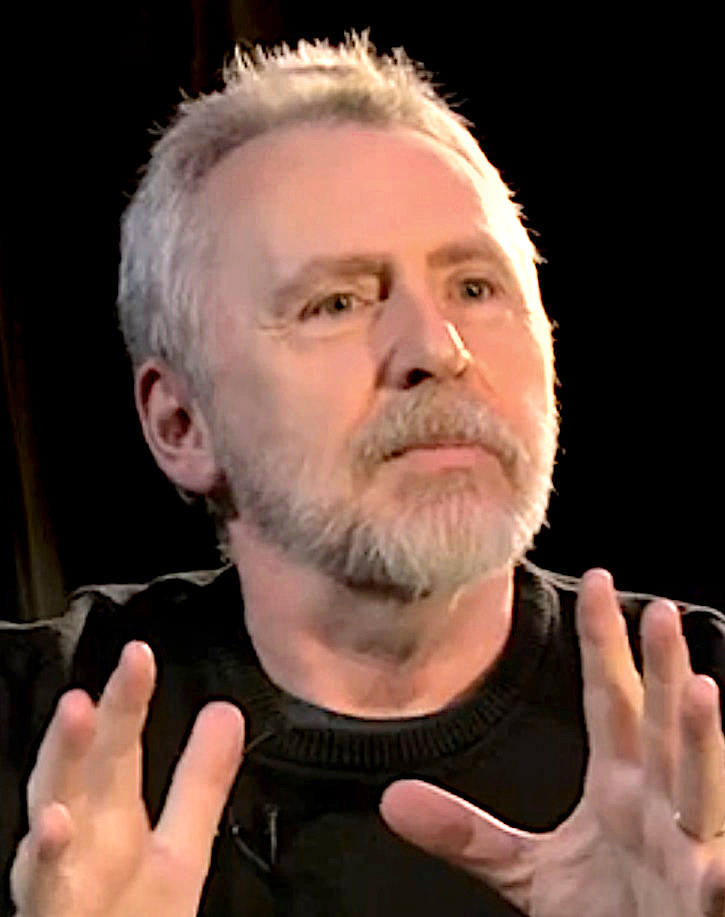
George F. Walker is one of Canada's most celebrated and prolific playwrights, widely regarded as a defining voice of the country's theatrical landscape. Born in Toronto's East End in 1947, Walker began writing plays in the early 1970s with little formal training and no particular plan — a fact that perhaps accounts for the restless, rule-breaking energy that runs through all of his work. His output over five decades spans more than thirty plays, ranging from absurdist political satire to the dark domestic comedies for which he is best known. The "East End Plays" — a loosely connected cycle that includes Criminals in Love, Better Living, Escape from Happiness, and several others — centre on working-class Toronto families navigating poverty, corruption, and dysfunction with a bleak wit that is entirely Walker's own. These plays established him as a writer with a particular gift for finding the tragicomic in ordinary desperation, and for crafting dialogue that crackles with menace and absurdity in equal measure. Walker has received the Governor General's Literary Award for Drama four times, a distinction no other Canadian playwright has matched. His work has been produced across North America, Europe, and Australia, and has been translated into more than a dozen languages. He has also written extensively for film and television, including the long-running series This Is Wonderland, which brought his characteristic social conscience to a mainstream audience.